Building Consistent Routines
Establish sustainable patterns that transform focus from an effort into an automatic response
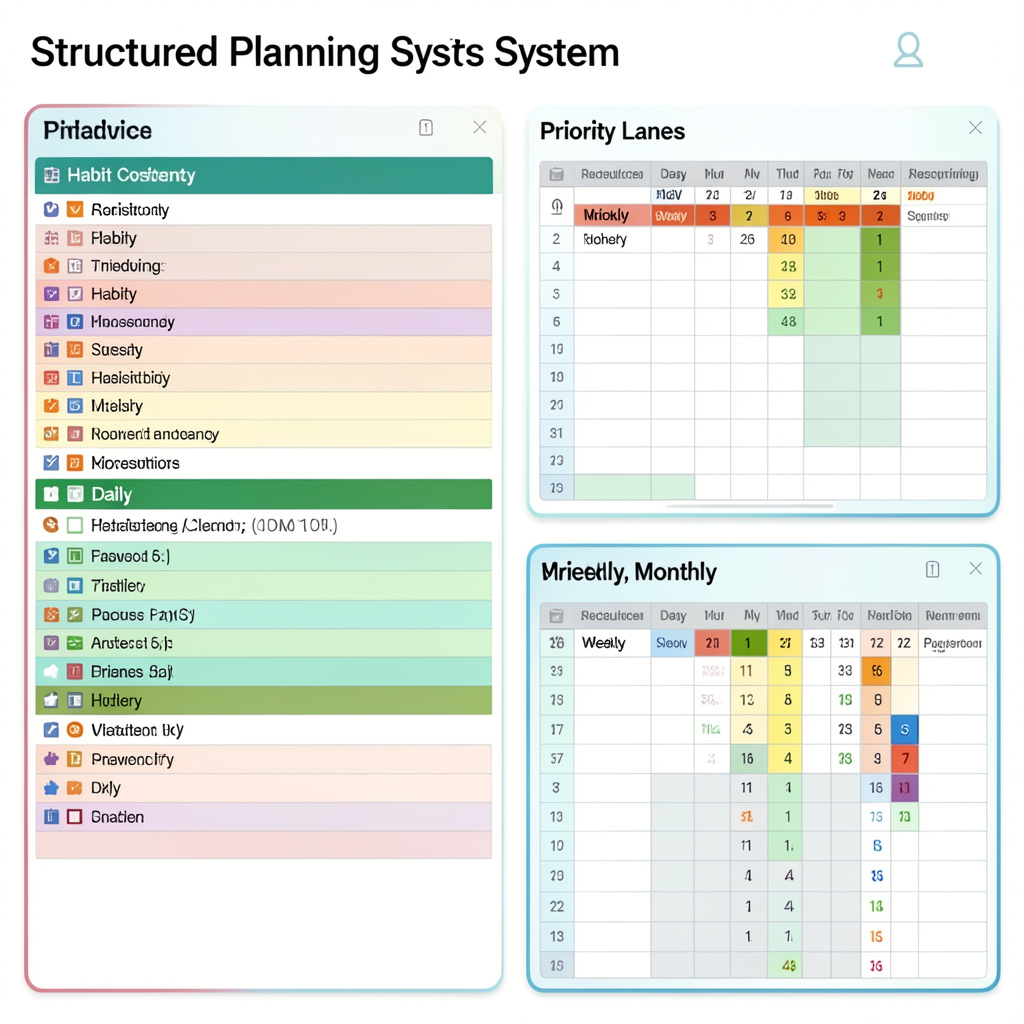
The Architecture of Consistency
Successful routines work with behavioral patterns by leveraging what behavioral scientists call "implementation intentions"—pre-decided actions triggered by specific cues.
The planning system in this image reveals the anatomy of sustainable habits: a physical tracker that creates accountability through visual progress, a pen positioned for immediate use (reducing friction, which research suggests can impact habit formation), and a clear workspace that eliminates competing stimuli.
Start small. Consider "sit on meditation cushion for 30 seconds" rather than "meditate for 10 minutes." The goal is establishing the neural pathway. Once that connection forms over time, extending duration becomes easier.
Environmental design supports habit formation. Place your running shoes by the bed. Put your phone charger in another room. Position your water bottle on your desk before you leave work. These details can influence habit consistency.
Overcoming Common Obstacles
Inconsistent Schedule
Challenge: Irregular work hours, shift patterns, or unpredictable daily demands make fixed routines difficult to maintain, especially for those working across different UK time zones or with international clients.
Solution: Create flexible anchor points based on events rather than clock times. Attach habits to "after waking" or "before first meal" instead of specific hours. Build minimum viable versions of each habit that work even on chaotic days—a 2-minute practice beats zero every time.
Low Initial Motivation
Challenge: Starting new habits feels overwhelming when energy and motivation are already depleted from demanding work schedules, family commitments, or the general exhaustion of modern life.
Solution: Reduce the barrier to entry by making habits small. Two minutes of practice is better than zero. Focus on showing up consistently. Momentum can build motivation over time.
Breaking the Chain
Challenge: Missing one day creates guilt and derails the entire routine-building process, leading to the "what's the point" mentality that kills progress.
Solution: Implement the "never miss twice" approach. One missed day is a slip; two consecutive days may become a pattern. Focus on recovery rather than dwelling on breaks. Track consistency over weeks, not days.
Framework for Sustainable Routines
Anchor Selection
Choose 3 non-negotiable daily events (waking, eating, sleeping) and link new habits directly to these moments for automatic activation.
Habit Stacking
Chain related behaviors together in sequence so completing one naturally triggers the next, reducing cognitive load.
Progressive Loading
Increase difficulty by 10% every two weeks—add one minute, one repetition, or one additional task to maintain growth without burnout.
Failure Protocols
Plan for disruptions by defining minimum viable versions of each habit that can be completed even on chaotic days.
Routine Development Timeline
Foundation Phase
Focus on single habit execution at the same time daily. Track completion without judgment. Expect inconsistency as neural pathways form.
Stabilization Phase
Habit begins feeling more natural. Add environmental cues and remove friction points. Notice which times of day work best for your energy levels.
Integration Phase
Introduce complementary habits. The original behavior now requires minimal conscious effort. Begin experimenting with duration or intensity.
Automation Phase
Routine operates on autopilot. Missing a session feels unusual. You can now layer additional complexity or refine existing elements based on results.
Start Building Your Routine Today
Connect with us to create a personalized routine framework tailored to your lifestyle, energy patterns, and focus goals.